Wakaba
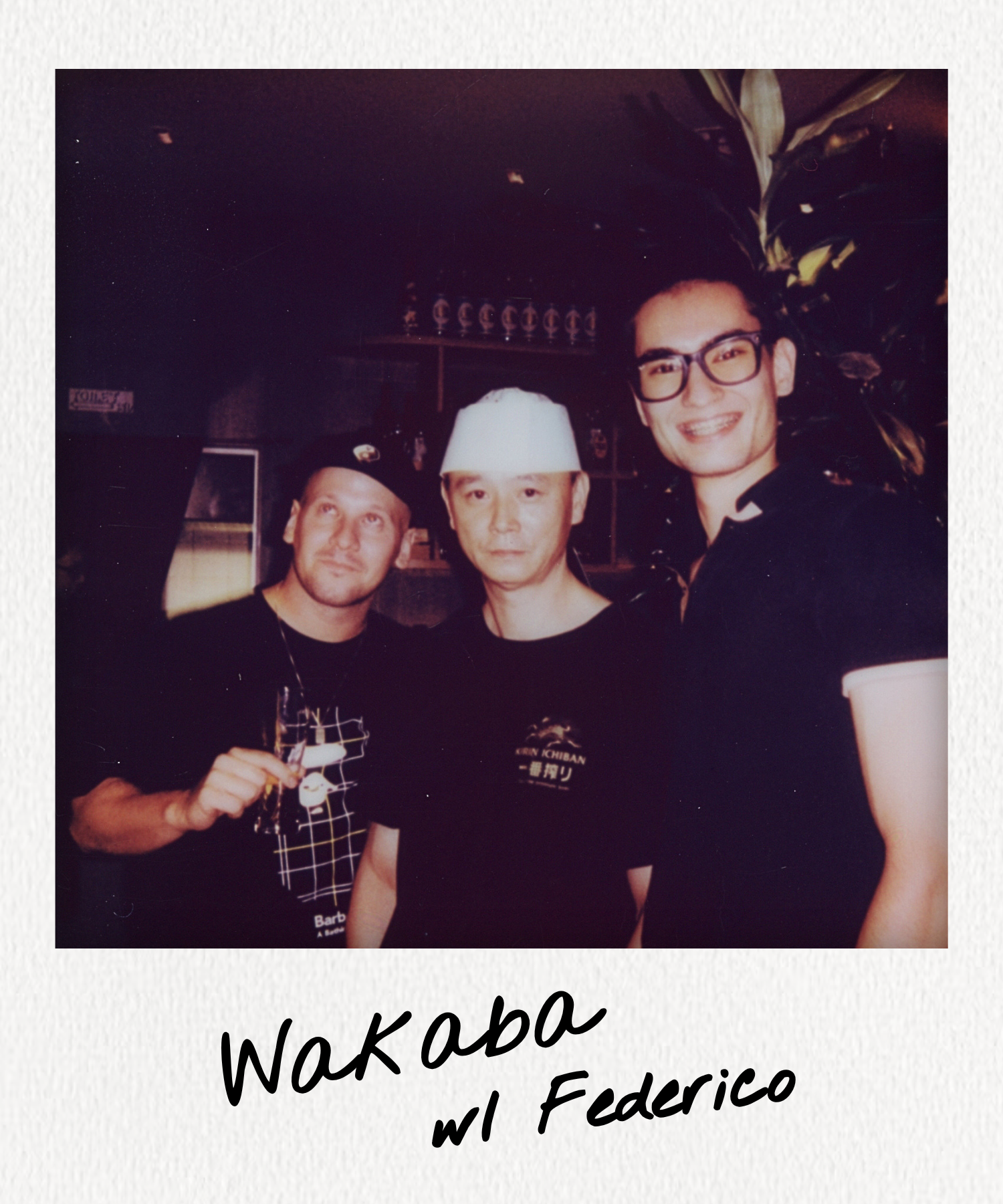
Milan · Japanese · 2 July 2026 · with Federico Facchinetti
overall
8/10
food
7.5/10
atmosphere
7/10
service
9/10
about the guide
Federico Facchinetti grew up in a village half an hour outside Milan and organizes parties and events with the Eternal Love collective. Food came before the DJ booth: his first paycheck went straight into eating out, and he never stopped. Three trips to Japan, and he still orders by asking the counter what came in that morning.
Federico found Wakaba the way he finds most things, by walking past it. He went in expecting another all-you-can-eat and found a counter run by a man who buys his own fish at the market every morning. It became the spot: cheap enough for a broke DJ, good enough to bring the whole music crowd. He calls it the HQ. We came on a packed weeknight, which is the only kind Wakaba has.
We started with the potato salad, the Japanese kind, Kewpie-creamy and cold, no cucumber. In the Milan heat it read like relief more than a side. Then the chicken skin skewers, the part most kitchens throw out. Federico told me to dust them with the red powder that lands on everything at an Asian grill. I did, and it worked: crisp where you brace for chew. Streetfood, done like it mattered. It was the plate I didn't see coming.
Federico ordered the omakase and let the counter decide: ten nigiri, four maki, the fish clean and cut without ceremony. Two gunkan followed. The tuna belly one collapsed on the tongue, gone before I could chew it. The tobiko beside it crunched and pushed back, saltier, closer to the sea. I liked both, for opposite reasons. The miso soup between them did the quiet work miso does, nothing more. Tigre made us try the wasabi, the real grated kind, and it climbed behind my eyes until they watered. First time in months.
The room is small and full, sake and wine bottles ranked along the wall, two chefs behind the counter moving like they have done this a thousand times, which they have. One of them owns the place and still shapes the sushi himself. Cheaper than the high-end rooms. Not cheap, either. Service is Tigre. When the mosquitoes got bad, she came around with repellent for the table before anyone asked. She decides when you have had enough beer, and she brought the sake to close without being asked.
behind the door
The family that runs Wakaba is Chinese, and the cooking is not an interpretation. Before this, the chef spent years at Poporoya, the counter that first put Japanese food in Milan when nobody was queuing for it. That is where the technique comes from. The room used to run all-you-can-eat, like half the Japanese places in the city. They dropped it. The food got better the day they stopped counting plates, and the plates in front of you make the case. There was a bar in this space before them. It closed, they got it cheap, and stayed.
what others said
been here? sign in to add your take